




























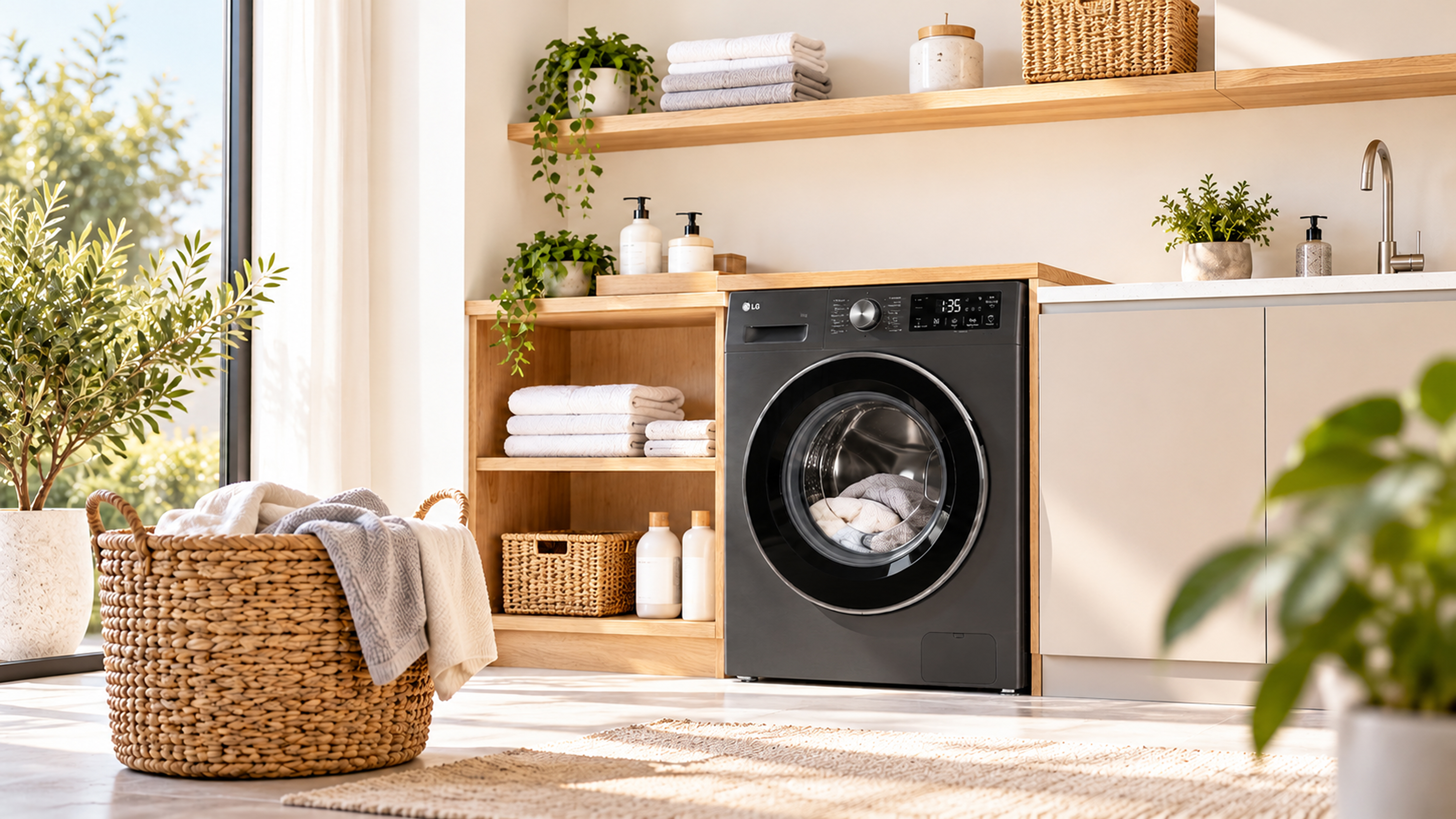
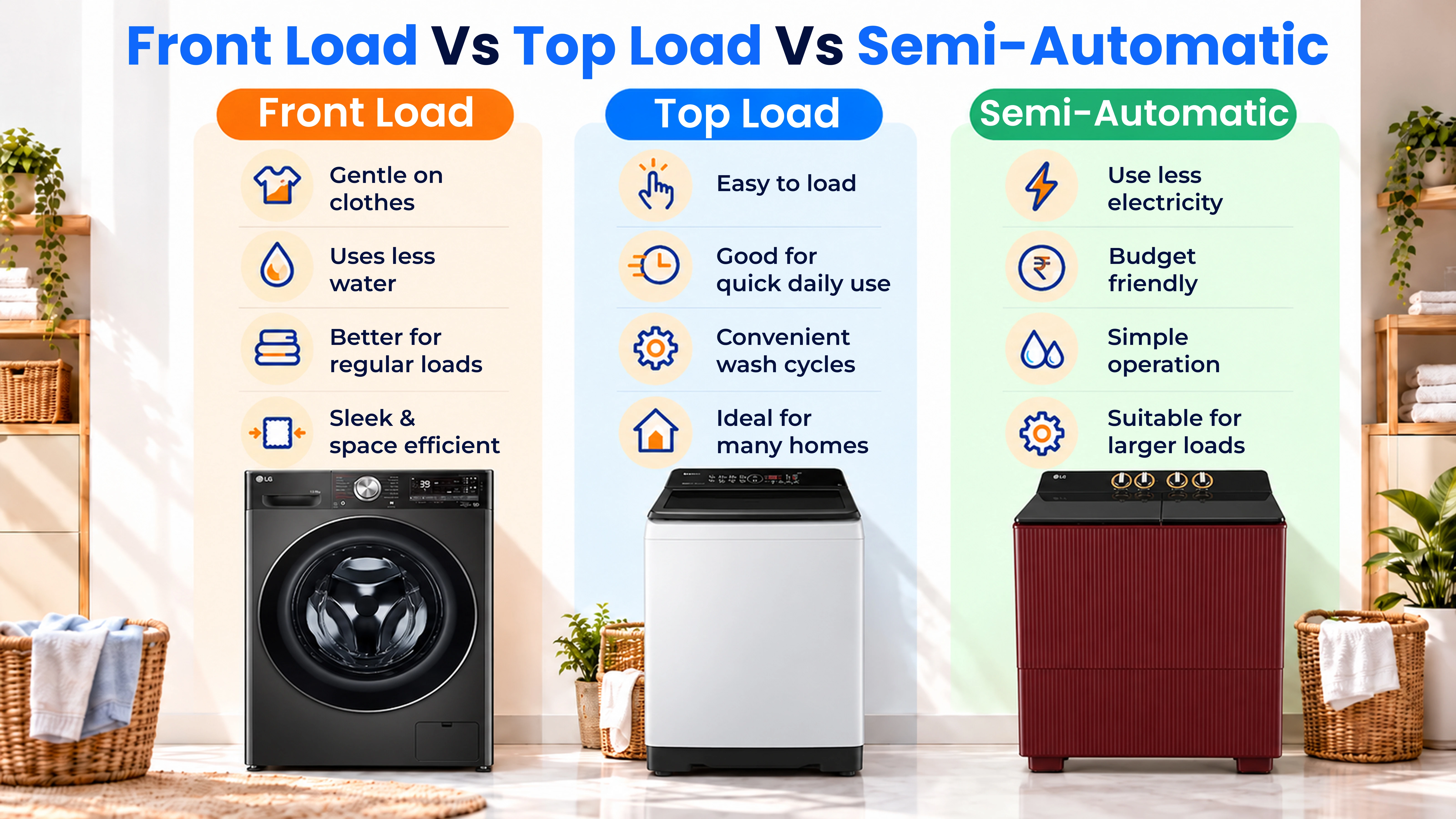
Choose type and capacity before brand. Front-load machines often prioritise fabric care and wash programs; top-load machines offer easy loading; semi-automatic models provide more manual control. Capacity should reflect actual laundry volume, not just household headcount.
How many kilograms do you need?
Capacity is the rated dry-laundry load. Bedding, curtains and fewer-but-larger wash cycles can justify choosing more capacity.
Front load vs top load vs semi-automatic
RPM, inverter motors, steam and smart programs
Higher spin speed can remove more water from suitable loads. Inverter motors, steam, automatic dosing and AI-assisted programs are model-specific; explain exactly what the selected model supports.
Water
Check inlet pressure, local water conditions and manufacturer guidance.
Drain
Plan a proper drain point and enough hose clearance.
Level floor
Correct levelling helps reduce unwanted vibration.
Which washing machine fits your routine?
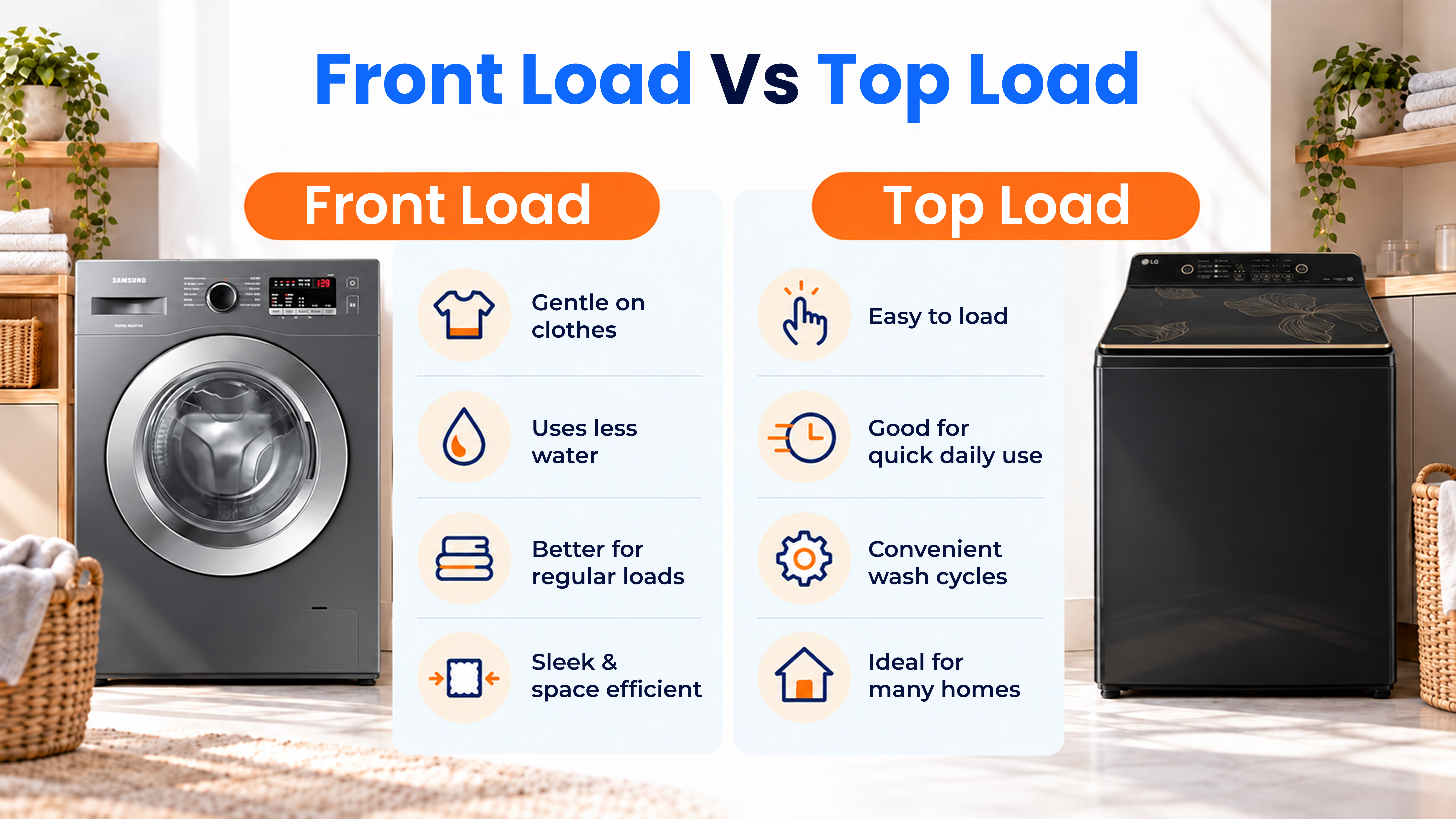
Match the machine to laundry frequency and convenience.
Compare front-load models and the wash programs you will actually use.
Compare fully automatic top-load options.
Consider 9 kg, 10 kg+ or separate washer/dryer options depending on space.
Washing-machine brands







A deeper buying guide before you make the final choice
The sections below answer the practical questions that usually come after the first shortlist. Use them together with the comparison tables and check the exact specification of the model you finally select.
A practical way to choose washing capacity
Think in terms of your largest regular load rather than a rare once-a-year wash. Count the clothes normally washed together and include towels and bedsheets. A couple with frequent small washes may not need the same capacity as a family that accumulates laundry for two or three days. Bulky bedding can occupy drum volume quickly even when its dry weight is below the rated capacity. If blankets or comforters are important, verify the manufacturer's guidance for the exact machine and item type. Buying excessive capacity can use more floor space and money, while choosing too little capacity can encourage overloading. The aim is comfortable headroom for your normal routine.
Wash programs: which ones actually matter?
Most households repeatedly use only a few programs. A daily or mixed wash, cotton cycle, delicate option and quick cycle may cover a large share of routine laundry, while allergy, steam, bedding or specialised stain programs can be valuable for particular households. Program names do not guarantee identical temperature, duration or load limits across brands. Check the maximum permitted load for the programs you expect to use, because some specialised cycles accept less than the machine's headline capacity. Also look at whether temperature, spin speed and rinse settings can be adjusted when you need more control.
Water, detergent and wash quality
Wash performance depends on more than the machine itself. Use detergent designed for the machine type and follow dosing guidance because excess detergent can create residue and poor rinsing rather than cleaner clothes. Water hardness, load size, fabric type and soil level influence the amount required. High-efficiency front-load machines generally need suitable low-foaming detergent. Do not fill detergent compartments beyond their marked levels. If the machine offers automatic dosing, understand how the system is filled and configured. Periodic drum-clean cycles and filter maintenance should be performed as described in the user manual.
Noise, vibration and where the machine will sit
A washing machine needs a firm, level surface. Uneven flooring or incorrect levelling can increase movement and vibration, particularly during high-speed spinning. Measure the full installation depth including hoses, connections and the open door or lid. If the machine will be near a bedroom or living space, compare published noise information where available and ask for a demonstration. Leave the service access and clearances specified by the manufacturer. For front loaders, make sure there is enough space to open the door fully and comfortably load a laundry basket.
After delivery: first-use checklist
Inspect the appliance before installation and confirm the model and accessories. Transport bolts on applicable front-load machines must be removed according to the installation instructions and kept safely for future transport. Ensure the inlet hose, drain hose and electrical connection are installed correctly and that there are no leaks. Run the recommended initial or calibration procedure if the model requires one. Learn where the pump filter, detergent drawer and drum-clean function are located. Register the product or retain warranty documents as required. Correct installation at the beginning can prevent many avoidable vibration, drainage and performance complaints later.
Questions to ask before billing
Confirm the exact model number, rated capacity, dimensions, warranty terms and the programs you expect to use most. Ask the salesperson to show how the detergent drawer, filter, drum-clean function and key controls work. If you plan to wash blankets or other bulky items, verify the manufacturer's guidance for those loads. Measure the installation location again with enough space for hoses and door or lid movement. Confirm whether installation accessories or additional plumbing work are required. If smart connectivity, steam, auto dosing or an in-built heater matters to you, verify that the exact variant includes it rather than relying on the series name. A clear installation plan is as important as the feature list.
Ready to compare washing machine options?
Explore Washing Machine products at Bharath Electronics & Appliances →
Before you buy: the washing machine details that are easy to miss
Use these checks to narrow the shortlist before comparing individual models. Exact specifications, compatibility and installation requirements can vary by model, so confirm the final product specification before purchase.
Capacity should reflect your normal laundry load, not the largest load you might wash once a year. Leave enough headroom for bedding without routinely under-loading an oversized machine.
Front load or top load? Start with your routine
Front-load machines are often chosen for wash performance, water efficiency and installation under counters, while top-load machines can offer convenient loading and shorter routines depending on the model. Consider bending comfort, available floor space, water pressure and preferred wash programs.
Choose capacity using real laundry loads
Think about the number of daily garments, towels, bedsheets and occasional blankets you wash together. Capacity labels are maximum dry-load ratings under specified conditions; bulky items can fill the drum before reaching the rated weight. Follow the manufacturer's loading guidance.
Spin speed and drying expectations
Higher spin speeds can remove more water from suitable fabrics, helping clothes dry faster, but the best setting depends on the fabric and program. A washing machine's spin cycle is not the same as a tumble dryer, so households needing ready-to-wear drying should compare dedicated dryers or washer-dryer options.
Installation and water conditions
Confirm inlet location, drainage, power point, floor level and the manufacturer's water-pressure requirements. If your area has hard water, ask about model-specific maintenance guidance and compatible cleaning/descaling practices rather than using unapproved treatments.

Common washing-machine buying mistakes
Avoid selecting capacity solely from family size, overlooking installation dimensions with hoses and door opening, or assuming every wash program can take the full rated load. Check warranty terms and exact feature availability for the model being purchased.

Compare online. Experience it at BEA.
Use this guide to narrow your shortlist, then compare current products, offers and availability on Bharath Electronics & Appliances. For a closer look, use the store locator or ask for a live video demonstration where available.
Shop current models
Find a nearby store
Get product guidance
Encourage customers to compare real features, dimensions and current offers.
Ready to shortlist your next appliance?
Explore current models at Bharath Electronics & Appliances or find a showroom near you.
Shop at BEA →Frequently asked questions
Is front load better than top load?
Neither is universally better. Compare loading style, programs, water use, space and budget.
Is 8 kg enough for a family?
It is a common starting point for many households, but laundry volume and bulky items matter.
What does RPM mean?
It is the drum speed during spin, expressed as revolutions per minute.
Is front load better than top load?
Front load can offer strong wash performance and efficiency; top load may be more convenient for loading. Compare exact models and routines.
What capacity is suitable for four people?
Around 7–8 kg is a useful comparison starting point, but bedding and weekly laundry volume can change the choice.
Can I wash blankets in any washing machine?
Check the care label, drum space, maximum load and the manufacturer’s bedding programme guidance.
Why does a washing machine vibrate?
Uneven flooring, incorrect levelling, unremoved transit bolts or an unbalanced load can contribute.
Is liquid detergent required for front load?
Use detergent type and dosage recommended by the machine and detergent manufacturer; avoid excess foam.
Can a washing machine be installed in a balcony?
Only if the location meets the manufacturer’s requirements for weather protection, power, water and drainage.
Should I buy a washer-dryer combo?
It can save space, but compare wash and dry capacities, cycle times and your drying needs.