

Tamil Nadu's summers do not leave much room for a wrong AC purchase. Buy an undersized unit and it runs constantly without ever really cooling the room. Buy an oversized one and you are paying for capacity you do not use while the compressor cycles on and off inefficiently. This guide covers the three decisions that matter most: tonnage, star rating, and inverter type, along with a straight comparison of the brands Tamil Nadu buyers ask about most, including Mitsubishi, O General, Voltas, Carrier, and Onida.
Getting Tonnage Right
AC tonnage measures cooling capacity, not weight, and it is the single most important spec on the box. Undersizing is the most common mistake buyers make when trying to save money upfront.
A 1.0 ton unit is suitable for rooms up to roughly 120 square feet with normal sun exposure. A Carrier 1.2 ton AC sits just above this bracket and is a sensible step up if your room runs slightly larger or gets more direct sunlight than average.
A 1.5 ton unit is the most commonly sold capacity in Indian homes, suitable for bedrooms and living areas between 150 and 180 square feet. This is where most shoppers search for a Carrier non inverter AC 1.5 ton as a budget-friendly option, since non-inverter units cost less upfront than their inverter equivalents.
A 2.0 ton unit is needed for larger living rooms, rooms with high ceilings, or spaces with heavy heat load from electronics and multiple occupants. Buyers researching an O General 2 ton AC or an O General AC 2 ton 5 star unit are typically furnishing a larger hall or open-plan living space.
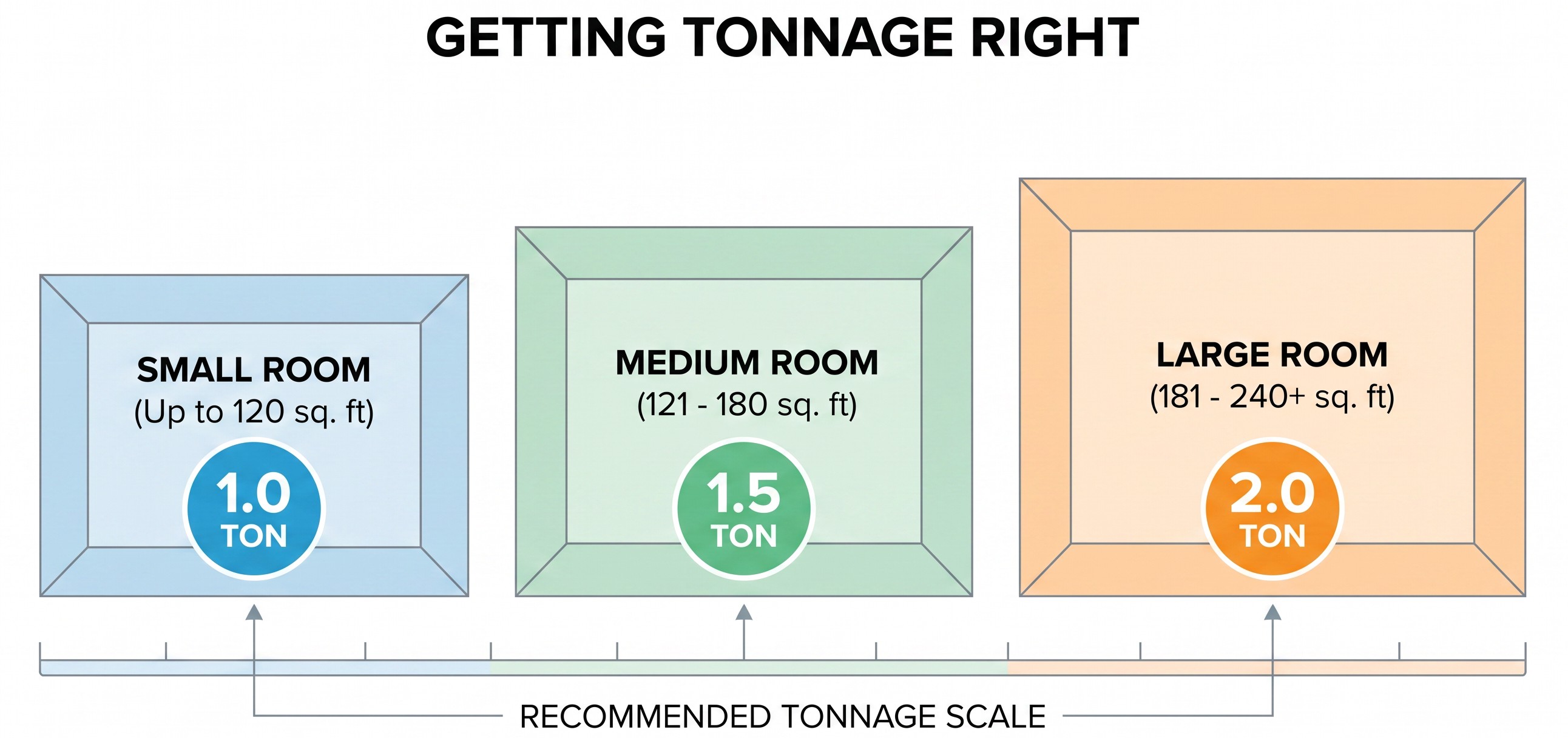
If your room falls between two sizes, it is generally safer to round up slightly rather than down. An AC that is marginally oversized still cools efficiently, while one that is undersized never really keeps up on the hottest days.
Quick Reference: AC Tonnage by Room Size
|
Room Size |
Recommended Tonnage |
Example Models |
|
Up to 120 sq ft |
1.0 ton |
Standard 1 ton split AC |
|
120 to 150 sq ft |
1.2 ton |
Carrier 1.2 ton AC |
|
150 to 180 sq ft |
1.5 ton |
Carrier non inverter AC 1.5 ton |
|
Above 200 sq ft / high heat load |
2.0 ton |
O General 2 ton AC, 5 star |
Star Rating: What You're Actually Paying For
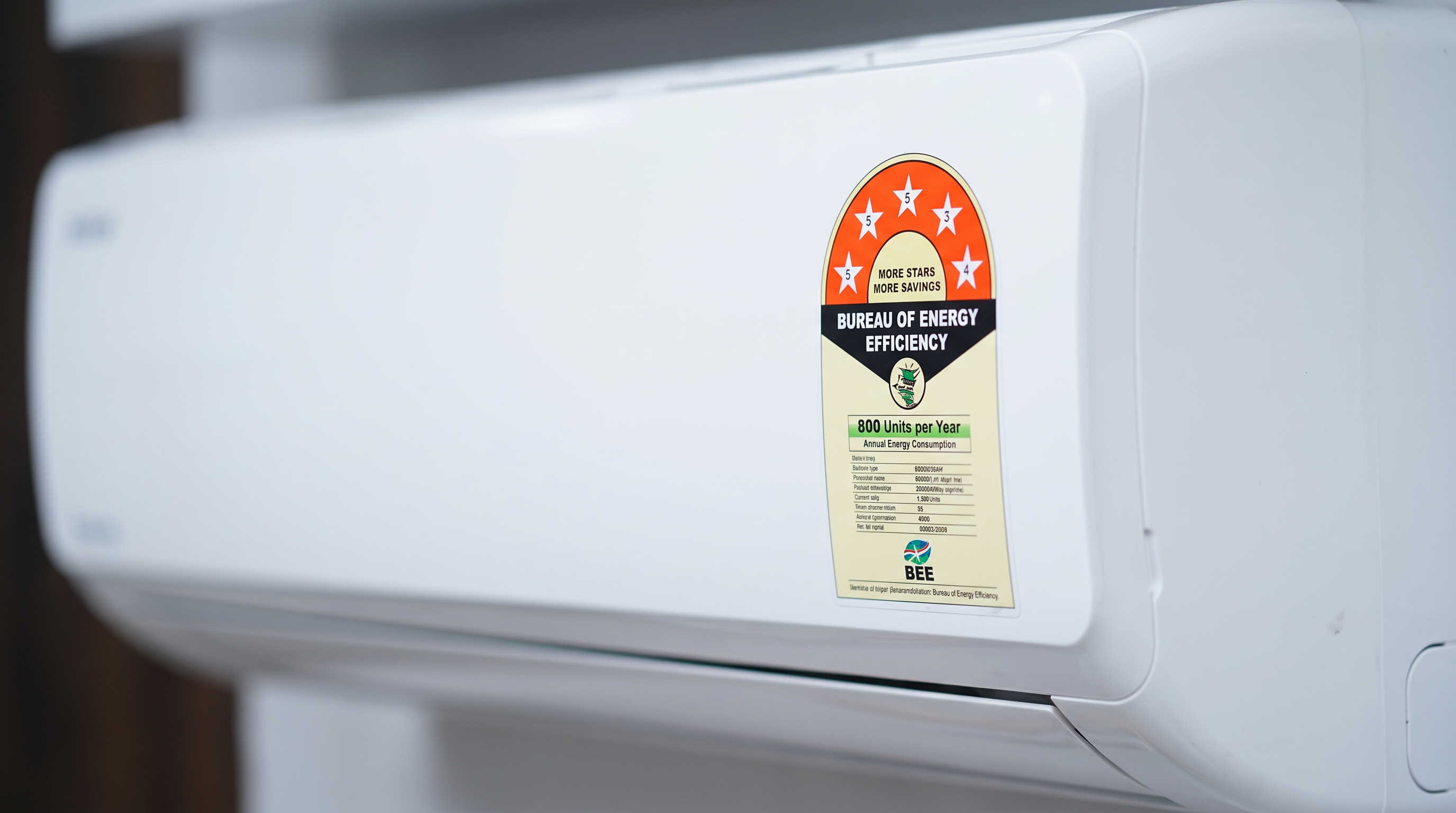
The BEE star rating, from two to five stars, reflects energy efficiency, not cooling power. A 5-star unit costs more upfront but consumes noticeably less electricity over its lifetime, and the gap becomes significant if the AC runs for several hours daily, which is typical in Tamil Nadu for most of the year.
As a rough guide, if you will run the AC more than five to six hours a day, a 5-star rated unit, such as a Mitsubishi AC 5 star model or an O General AC 2 ton 5 star unit, usually pays back the extra upfront cost through electricity savings within two to three years. If usage is occasional, a 3-star unit is often the more sensible spend.
Inverter vs Non-Inverter: The Question Everyone Asks
Non-inverter, or fixed-speed, compressors run at full power until the room reaches the set temperature, then switch off completely and restart later. This cycle is harder on the compressor and less efficient over time. Inverter compressors instead adjust their speed continuously to maintain temperature, which uses less electricity and runs quieter.
Non-inverter ACs are cheaper upfront, simpler to service, and a reasonable choice for rooms used only occasionally, such as guest rooms or spare rooms. This is the segment most buyers land in when comparing a Carrier non inverter AC 1.5 ton.
Inverter ACs have a higher upfront cost but meaningfully lower running costs for rooms used daily for extended hours, such as bedrooms and main living areas. Mitsubishi and O General's higher-end ranges are almost entirely inverter based for this reason.
Brand Comparison at a Glance
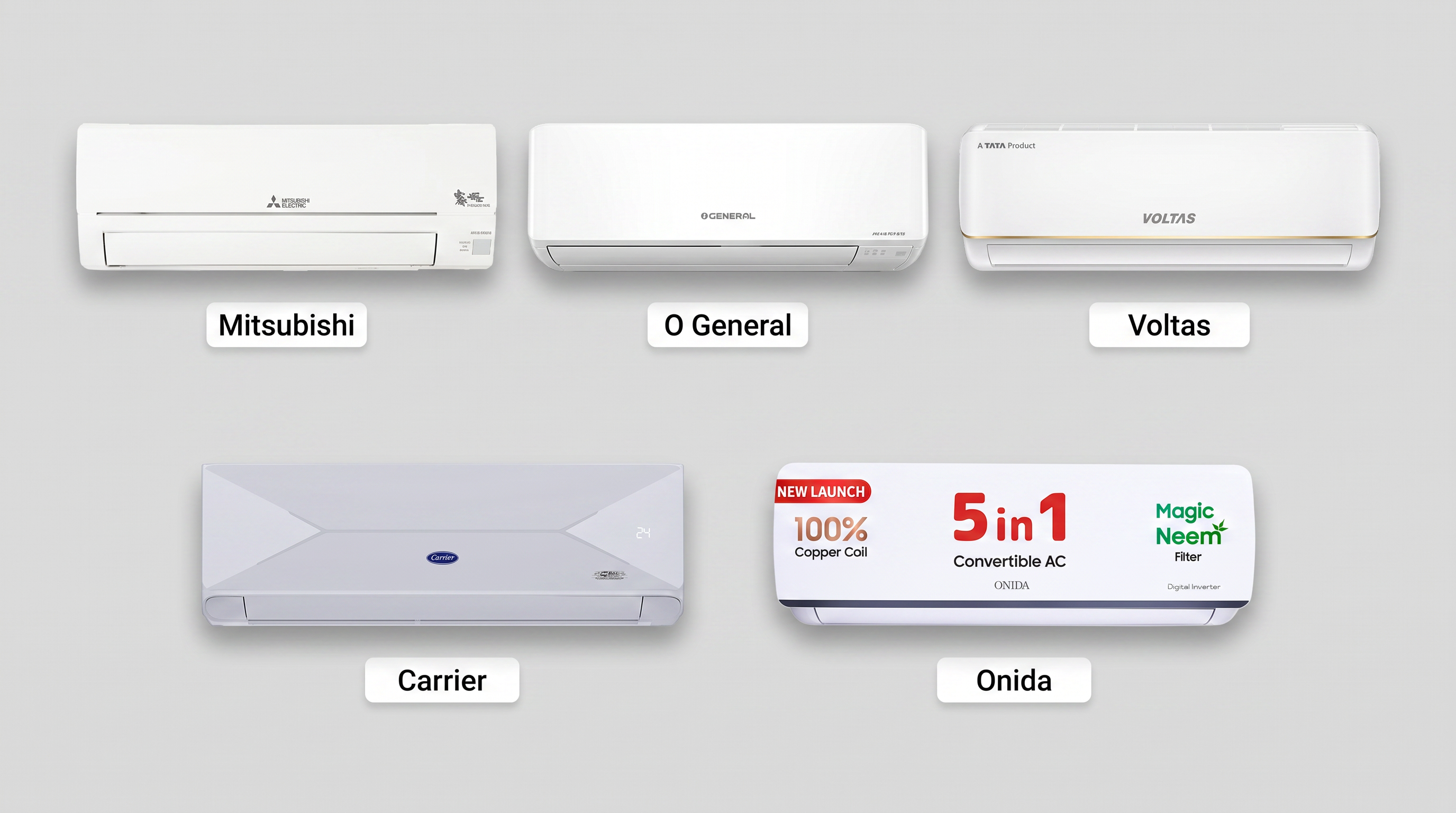
Mitsubishi is known for compressor reliability and quieter operation. It is a common choice for buyers researching a Mitsubishi AC 1.5 ton 5 star price who want a long-service-life unit and are willing to pay a premium for it.
O General has a strong reputation for cooling consistency in high-humidity conditions, which makes an O General 1 ton AC price or O General AC 1 ton search common among buyers in coastal and high-humidity parts of Tamil Nadu.
Voltas is one of the most widely serviced brands in India, with strong availability of spare parts and technicians. The Voltas SAC 182FS Prism split AC is a popular mid-range option, and pairing it with a good Voltas stabilizer is worth budgeting for in areas with unstable voltage.
Carrier is competitively priced with solid cooling performance, particularly in the 1 to 1.5 ton non-inverter segment that budget-conscious buyers tend to search for.
Onida is generally the most budget-friendly of the major brands, a sensible pick for an Onida AC 1.5 ton 3 star unit where upfront cost matters more than premium features.
Don't Forget the Stabilizer
Voltage fluctuation is a real issue across parts of Tamil Nadu, particularly outside major city centres. A Voltas stabilizer or an equivalent unit protects your AC's compressor from voltage spikes and drops that would otherwise shorten its lifespan significantly. If your area has a history of unstable supply, treat the stabilizer as a mandatory part of the purchase, not an optional accessory.
Installation and Placement Matter More Than Buyers Expect
Even the right AC, correctly sized and rated, underperforms if it is installed poorly. The outdoor unit needs adequate airflow around it and should not be boxed into a tight, enclosed space where hot exhaust air simply recirculates back into the condenser. The indoor unit should be positioned to distribute cool air evenly across the room rather than blowing directly onto a bed or sofa, which can make the space feel colder than it actually is while leaving other corners of the room warm. Pipe length and routing between the indoor and outdoor units also affect efficiency, since longer refrigerant runs slightly reduce cooling performance. A qualified installer accounts for all of this at the time of setup, which is one more reason to buy through a retailer with an established, trained installation team rather than the cheapest quote you can find.
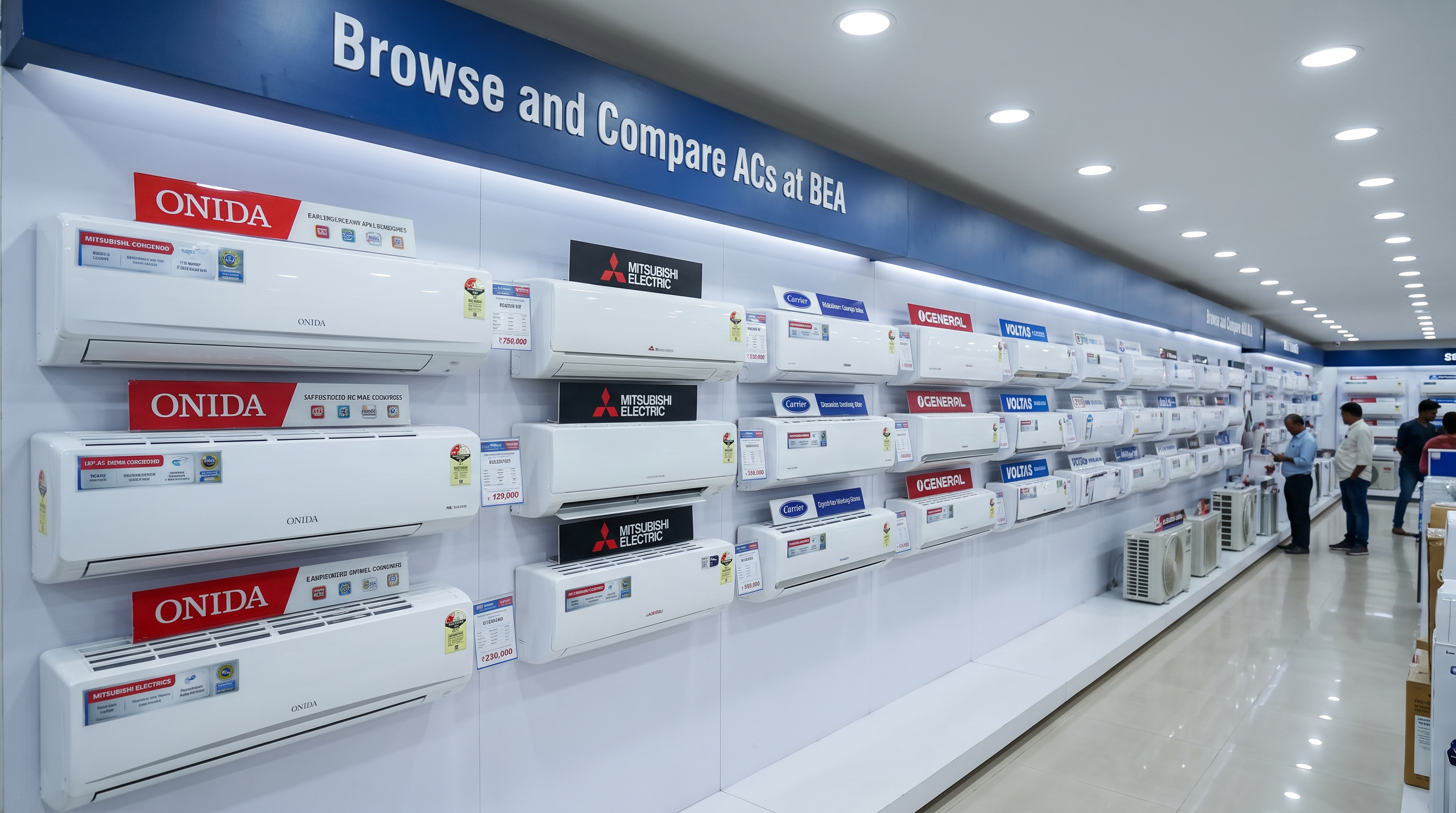
Browse and Compare ACs at BEA
You can explore the full split AC range, including Mitsubishi, O General, Voltas, Carrier, Onida, and more, filtered by tonnage, star rating, and inverter type in our air conditioner collection. For LG's AC range specifically, visit our LG air conditioner listings.
Frequently Asked Questions
How do I know what tonnage AC I need for my room?
As a rough guide, a 1.0 ton AC suits rooms up to about 120 square feet, 1.5 ton suits 150 to 180 square feet, and 2.0 ton is needed for larger rooms above 200 square feet or spaces with high heat load. Ceiling height, sun exposure, and number of occupants can all push you toward the next size up.
Is an inverter AC worth the extra cost over a non-inverter one?
If the AC runs more than five to six hours a day, yes. The electricity savings from an inverter compressor typically offset the higher purchase price within a few years. For occasional use in guest rooms or spare rooms, a non-inverter unit is often the more economical choice.
Do I need a stabilizer even for an inverter AC?
Yes, if your area experiences voltage fluctuations. Inverter compressors are actually more sensitive to voltage instability than fixed-speed compressors, so a stabilizer is just as important, sometimes more so, with inverter models.
What's the real difference between a 3-star and 5-star AC?
Star rating reflects energy efficiency, not cooling capacity. Both a 3-star and 5-star unit of the same tonnage cool a room equally well. The difference shows up in the electricity bill, where a 5-star unit consumes noticeably less power over the same number of running hours.
How often does an AC need servicing?
Most manufacturers recommend servicing before the start of summer and again mid-season if the unit runs heavily, roughly every four to six months for daily-use ACs. Regular servicing, including filter cleaning, has a direct impact on both cooling efficiency and electricity consumption.